Happy New Year from the Hoopoe!

As 2015 comes to a close and we look forward to another year, we tapped the stunning Hoopoe for some advice on surviving and thriving in 2016.

1. Be true to yourself.

IMG_6401

The Hoopoe (or duchifat in Hebrew), which was voted in as Israel’s national bird in 2008, is most likely named after the distinct oop-oop-oop sound it makes. It doesn’t get fancy with adjectives or descriptions of all the beautiful features it has (e.g. the bow-beaked, golden-black-tip-crested, etc.) …it’s just the Hoopoe, keepin’ it real.  You can hear the Hoopoe’s eponymous song in this great video where it stands outside of someone’s window.

2. Get off your butt.

While the Hoopoe does take adequate time to bask in the sun to catch some rays, most of the time it is dig-dig-digging for food, as you can see here…

Its diet consists of insects, small reptiles, and occasionally seeds and berries. When it is foraging, it is in constant motion – like a woodpecker pecking the ground.  In flight, it has a distinct undulating wing motion, often compared to the flight of a butterfly.

3. Watch your mouth!
IMG_6389

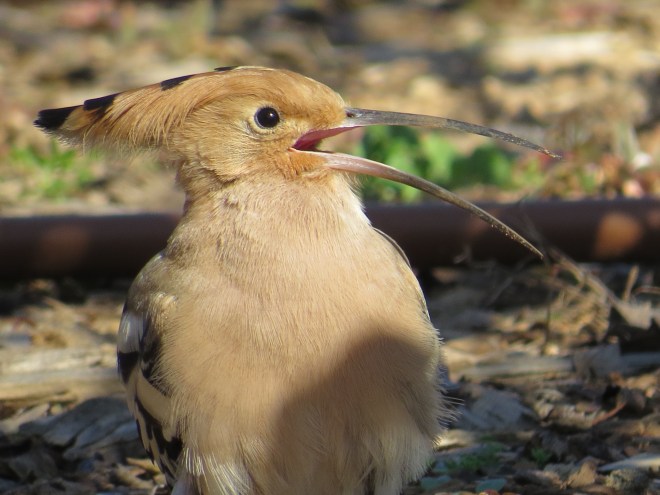
The Hoopoe uses its long curved beak for eating and to defend itself and its territory.  It has special muscles in its jaw so it can actually open its beak while it is deep in the soil.  It also uses its sharp beak as a weapon and has been known to render others blind!

4. When needed, make a stink.
IMG_6349

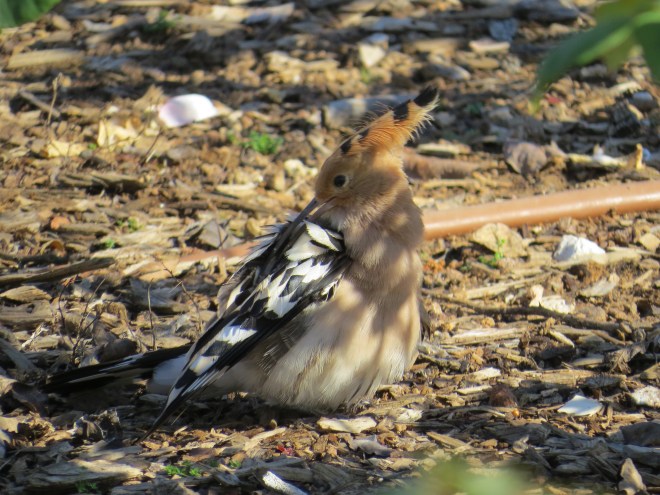
With all the tension across the globe this year, the last thing we need to do is sit back and do nothing. The Hoopoe has a special defense mechanism: it can stink up a place faster than Adele sells out a tour.  It has special glands that produce a nasty smelling secretion (we’re told it smells like rotting meat) which it applies all over its body…kind of an anti-cologne. Apparently, this stenchy solution also prevents parasites and acts as an antibacterial agent.

5. Let your light shine.
IMG_6402

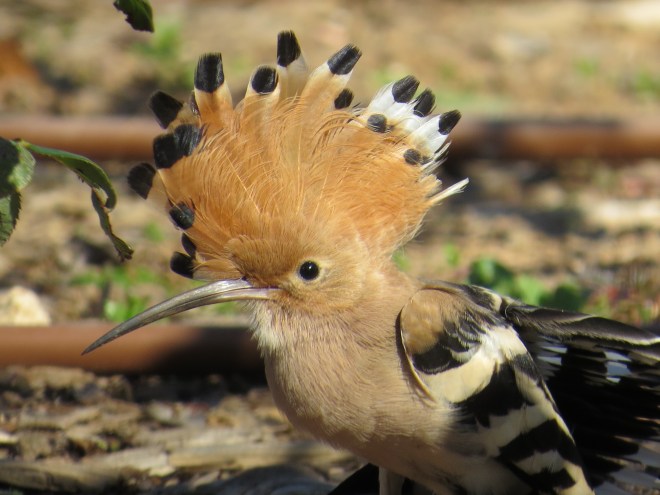
The Hoopoe is a beautiful creature in its own right…but when its crest is fanned open, it’s like a new world appears.  And for this beauty, the Hoopoe turns to Marianne Williamson‘s wonderfully inspiring words:

Our deepest fear is not that we are inadequate. Our deepest fear is that we are powerful beyond measure. It is our light, not our darkness, that most frightens us. We ask ourselves, who am I to be brilliant, gorgeous, talented, fabulous? Actually, who are you not to be? …Your playing small doesn’t serve the world. There’s nothing enlightened about shrinking so that other people won’t feel insecure around you. We are all meant to shine, as children do…. It’s not just in some of us; it’s in everyone. And as we let our own light shine, we unconsciously give other people permission to do the same. As we’re liberated from our own fear, our presence automatically liberates others.

We wish a Happy New Year to you and yours (avian, human, and otherwise) and to our lovely planet!

That’s not yours, it’s Myna!

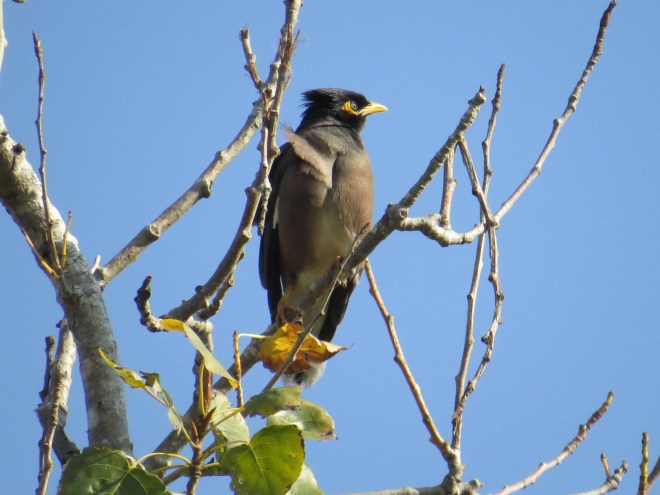
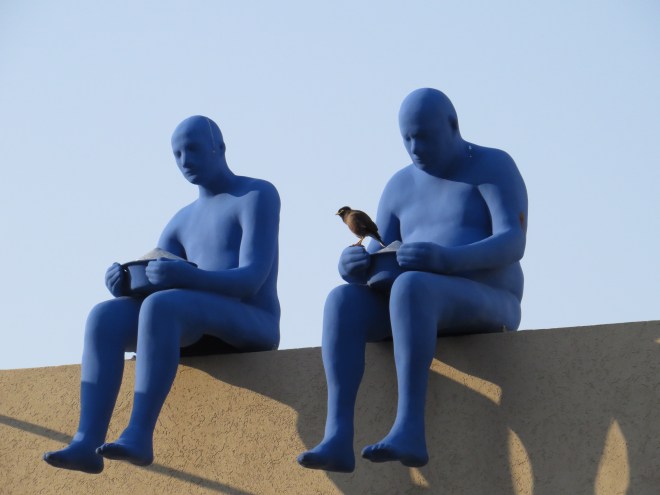
The Myna is to Tel Aviv what the Pigeon is to New York City…at least in terms of pervasiveness.

myna grass.jpg

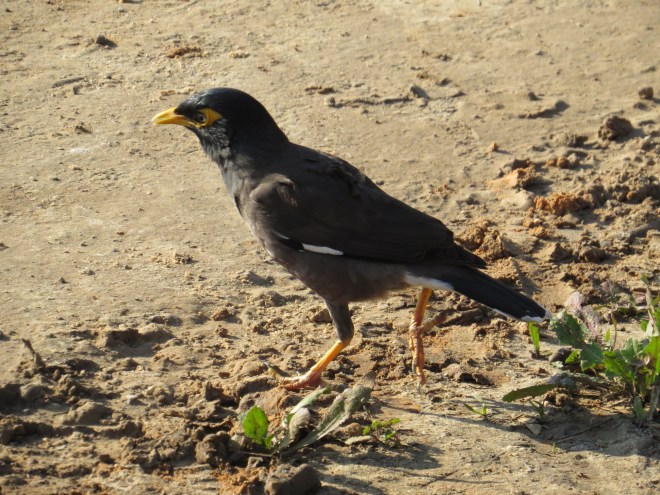
Mynas are beautiful birds: bright yellow masks and beaks on a black body and black and white aflutter in flight.

myna agamon.jpg

They are crafty and quite invasive – using other birds’ nests, eating a wide variety of food, and mimicking the sounds around them (they are in the same family as the Starling) .  They often work together in packs, like crows.

myna in palm.jpg

Interestingly, but not surprisingly, the Myna is not a native species to Israel.

IMG_5758.jpg

It was brought from India by the Zapari (a bird zoo in the Park Hayarkon).  Some Myna escaped the zoo in the mid 90’s and they have been thriving ever since.

bluemenmyna.jpg


TwoHawks flies to Israel.

We landed in Israel just as Seinfeld, one of the kings of comedy, flew in for his first-ever standup performances in the country  (3 extra shows added, all sold out).  Israel is a migratory hub for many European and Asian birds.  At least 500 million birds pass through its skies twice a year during the migration season!

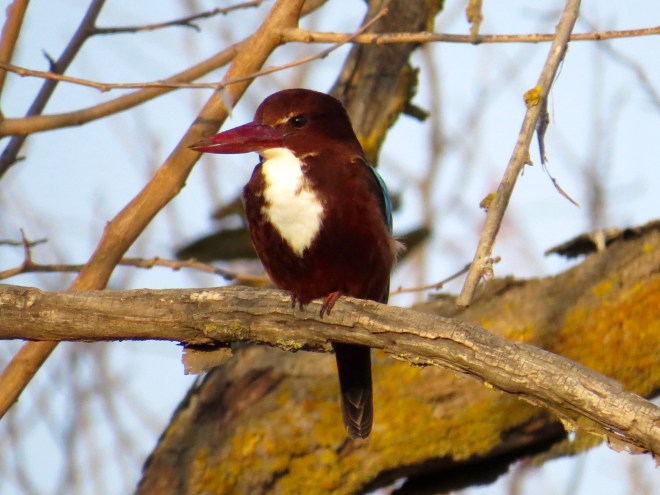
While we didn’t catch Seinfeld’s show, we did get to see another king (a White-throated kingfisher, to be precise)…and many others.  Stay tuned, there’s more to come!

IMG_5221.jpg

“Life has taught us that love does not consist in gazing at each other but in looking outward together in the same direction.” – Antoine de Saint Exupéry

IMG_4618.jpg

Why did the Painted Bunting come to Brooklyn?

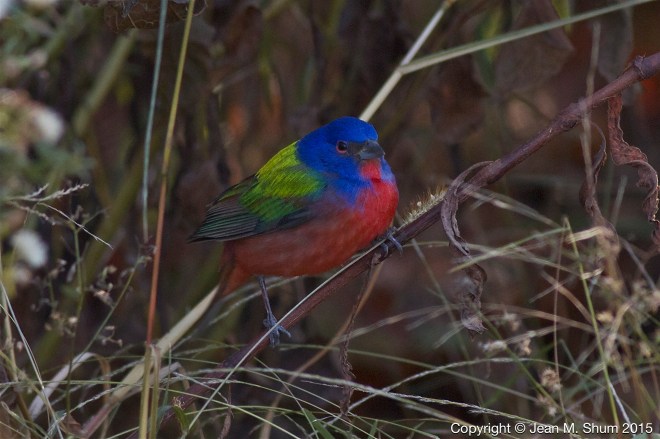
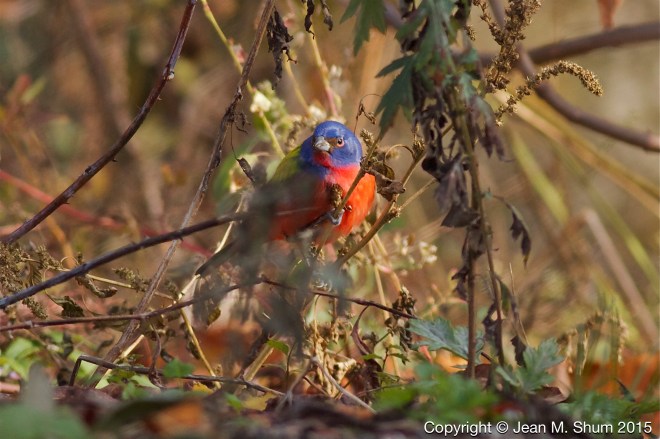
It has been an exciting week in the New York City bird scene (yes, that’s totally a thing).  On Sunday, Keir Randall spotted a Painted Bunting (PB) in Prospect Park in Brooklyn. Word quickly got around and local birders were all aflutter. Now, with mentions in the New York Times, the Gothamist, and Fox and CBS news crews on the scene today, the bird is only going to get more attention.

The bird is gorgeous.

PBinleaves
Photo: Jean Shum
PBonbranch
Photo: Jean Shum

It’s fitting that it’s name in French, Passerin nonpareil, literally means “Cardinal without equal” (it is technically a member of the Cardinal family).

Its blended colors instantly reminded us of a slightly melted snow cone:

PB and snowcone2
Compare and contrast: Painted Bunting, Yummy snow cone

And it is exceedingly rare in these parts. According to the New York Post: “This is the first adult male Painted Bunting that’s ever had a recorded visit to Brooklyn — and one of only 10 birds of his species to have arrived in NYC since 1927, according to data compiled by the New York State Avian Records Committee.”

For a lot of people who can’t travel to its normal habitat range (southern states, Mexico, the Caribbean, and Central America), this is their one chance to see it. As a result, people are reportedly coming from as far as Maryland to catch a glimpse. 

So why has this beauty breezed into Brooklyn?  Here are three possibilities:

  1. It doesn’t want to be caged.

    Unfortunately, because Painted Buntings are so beautiful they “are captured both on their Florida breeding grounds and on their wintering grounds in the Caribbean, Mexico, and Central America. Trappers take only the showy adult males, skewing the sex and age ratios in the population as well as reducing overall numbers.” (from an article from All About Birds , which is run by the Cornell Lab of Ornithology).  Perhaps the little guy is sick of running!

  2. It came to see its Latin “namesake”, Keir, the birder who first saw it here.

    PB’s Latin name, Passerina ciris (or keiris in Greek), was given to the bird by Linnaeus due to a Greek myth related to its violet/blue head, according to the book, “One Hundred Birds and how they got their names” by Diana Wells.

    The story goes: A woman, Scylla, who drowned and was turned into a seabird named “Keiris” after she betrayed her father by stealing a lock of his magical purple hair. So it is a coincidence that Keir Randall of Brooklyn happened to be the first one to spot the Passerina keiris?  Only those two might know.

  3. It believed the hype.

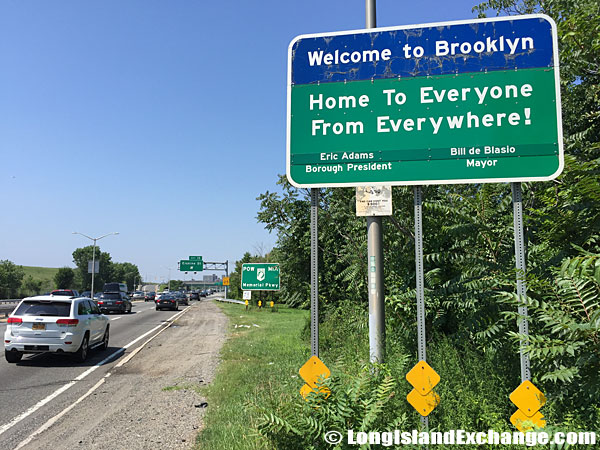
welcometobrooklyn

Perhaps the PB caught a strong wind that blew it off of its normal migration route…it saw the “Welcome to Brooklyn” sign and was intrigued. 

PBinsun

Whatever the truth, we’re glad that it decided to visit.  If you’d like to see it for yourself, check out the New York ABA Birding News for the latest updates.

Thank you to Jean Shum for the photos and info.