Music by Santa Esmerelda
Amazing! 180 degree head rotation. Take that, owls!
Music by Santa Esmerelda
Music by Santa Esmerelda

Egg incubation swap.
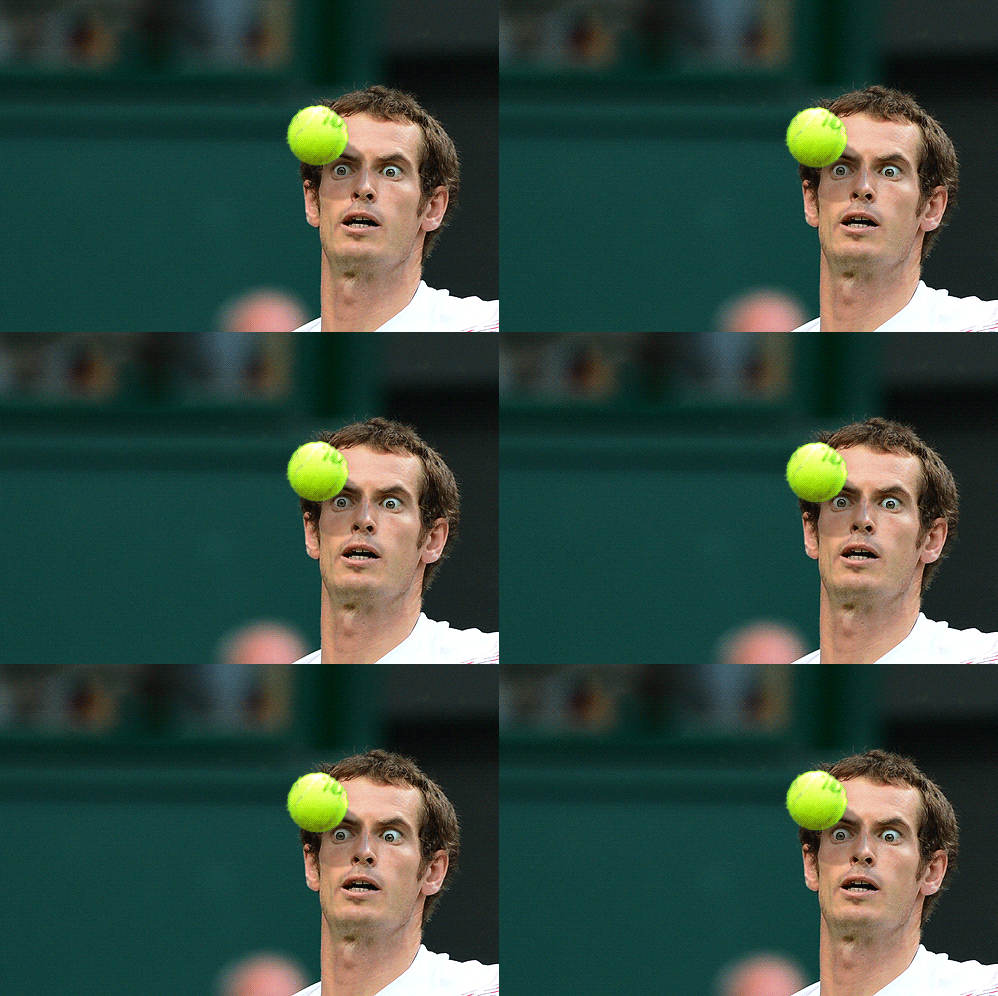
The large eyes of a raptor are positioned on the front of the face, affording binocular vision and excellent depth perception. If our eyes were as large in proportion to our bodies as the eyes of a Red-tailed Hawk, they would be about the size of tennis balls. – From Red-tailed Hawk by Charles R. Preston
Photo via @TheNoShow


Christo took on some egg-sitting responsibilities today. He was on the nest for one and a half hours while Dora was away. Here he is just before he leaves to find Dora (perhaps?). She returned a few minutes later.
Dora calling for Christo.
After a few minutes, Christo arrives and starts checking on the egg while Dora surveys the scene.
They both leave the nest for about 8 minutes. Dora returns, checks out Christo soaring above, then settles back on the egg.
Dora preening before rain starts.
Preening is a bird’s way of grooming its feathers to keep them in the best condition. While preening, birds will remove dust, dirt and parasites from their feathers and align each feather in the optimum position relative to adjacent feathers and body shape. Most birds will preen several times a day to keep themselves healthy.The uropygial gland, or preen gland, is an essential part of preening. This gland is found near the base of the tail and produces an oily substance that contains diester waxes that help waterproof feathers and keep them flexible. While preening, birds will spread this oil to each feather. Some types of birds, including owls, pigeons, parrots and hawks, lack a uropygial gland and instead have specialized feathers that disintegrate into powder down, which serves the same purpose as preen oil. Birds that produce powder down are less likely to bathe or immerse themselves in water and do not require the stronger waterproofing that preen oil provides.
music: Thrift Shop by Macklemore & Ryan Lewis
 TwoHawksNYC